Jul 9, 2026Buying Guides
Abrasive Belt Buying Guide: Backing, Grain, Joint Type and Custom Size Checks for B2B Orders
Understand how B2B buyers should evaluate abrasive belts by backing material, abrasive grain, joint type, grit range, size and application testing.
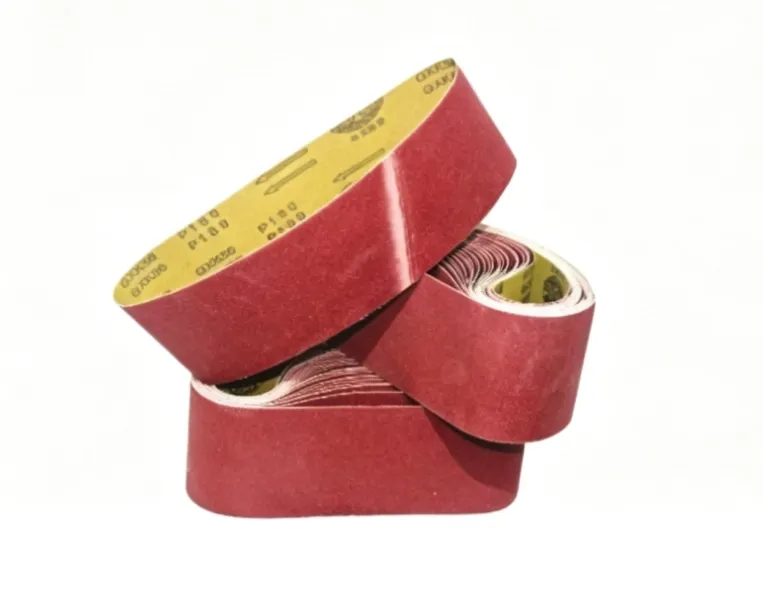
Abrasive belts are used in woodworking, furniture manufacturing, metal finishing, hardware processing, stainless steel work and industrial coating preparation. For B2B buyers, choosing an abrasive belt is not only about grit size.
Start With the Application
A belt used for wood calibration is different from a belt used for stainless steel finishing. A narrow belt used on a hand-held tool is different from a wide belt used on an industrial sanding machine.
- What material will be sanded?
- Is the process dry or wet?
- Is the target heavy stock removal, surface preparation or fine finishing?
- What machine type and belt size will be used?
- What grit sequence is used before and after this sanding step?
Backing Material: Paper, Cloth and Flexible Structures
The backing gives the belt strength and flexibility. Cloth backing is common because belts must handle tension, movement and repeated contact. Heavier cloth backing can support strength and stability, while more flexible backing can help contour sanding and profile sanding.
Buyers should consider tensile strength, flexibility, edge durability, resistance to tearing, machine tension, contact wheel condition and workpiece shape.
Abrasive Grain Selection
Aluminum oxide is widely used because it offers stable performance and broad application coverage for woodworking, metal and general sanding applications.
Silicon carbide is sharp and can be useful for certain finishing processes, non-ferrous materials, coatings or applications requiring a finer finish.
Ceramic abrasive can be useful in demanding sanding conditions where stronger cutting performance and longer service life are needed, but it usually requires suitable machine pressure and application conditions.
Joint Type and Belt Running Stability
The joint is one of the most important quality points in abrasive belts. A poor joint can cause vibration, marks on the workpiece, early belt failure or unsafe operation.
- Joint strength.
- Joint thickness.
- Running direction.
- Smooth contact at the joint area.
- Heat and pressure resistance.
- Suitability for the machine and application.
Size Accuracy and Grit Sequence
Abrasive belts are often custom-sized. Even small size problems can affect installation, tracking and running stability. Buyers should confirm belt width, length, tolerance, machine model, running direction, grit sequence and quantity per size and grit.
Grit selection should be planned as a sequence. Jumping too far between grits can leave deep scratches, while too many steps may reduce efficiency.
Quality Checks Before Bulk Ordering
- Belt tracking stability.
- Joint strength and smoothness.
- Edge wear.
- Backing flexibility.
- Grain adhesion.
- Clogging behavior.
- Finish consistency.
- Operator feedback.
Saylonk Product Match
Saylonk supports abrasive belt buyers with product matching based on material, machine, belt size, grit range, backing requirement and target finish. MOQ, packaging, delivery planning and required documents can be discussed according to the product, quantity, target market and customer requirements.
Buyer Takeaway
Need abrasive belts for woodworking, metal finishing or industrial sanding? Send your belt size, material, machine type, grit range and target finish through www.saylonk.com. Saylonk can help suggest a practical sample testing direction before bulk ordering.
Related Products and Inquiry Support
Related Saylonk product pages for this topic include Abrasive Belts, Jade Dolphin GXK56 Abrasive Belt and YZ755 Aluminum Oxide Cloth Roll. These pages help buyers compare product families, applications and suitable sample options.
For quotation or sample matching, share your material, tool type, grit range, size, packaging needs and target market. Contact Saylonk Abrasives to confirm suitable abrasive products, OEM/private-label options and supply details.