Jul 6, 2026Product Comparisons
Abrasive Belt Joint Types Explained: Butt Joint vs Overlap Joint
Compare butt joints and overlap joints for abrasive belts, including belt direction, backing, flexibility, joint strength and surface finish quality.
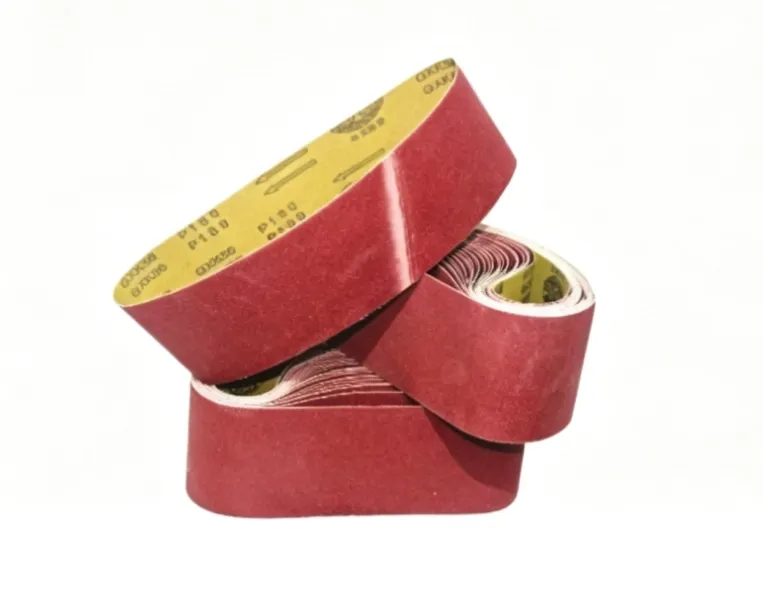
The joint of an abrasive belt affects tracking stability, flexibility, surface finish and service life. Butt joints and overlap joints are both common, but they are not interchangeable in every application.
Butt Joint
A butt joint connects the two belt ends edge to edge with a reinforcing tape. It creates a flatter joint area and is often chosen where a smoother running feel and reduced joint mark are important.
Overlap Joint
An overlap joint places one belt end over the other. It can provide strong mechanical support, but the joint area is thicker and the belt normally has a running direction that must be followed.
Selection Factors
- Use butt joints for fine sanding, contour work and applications sensitive to joint marks.
- Use overlap joints where joint strength is important and the machine/application can tolerate the joint thickness.
- Consider backing weight, belt width, speed, contact wheel hardness and whether the workpiece is flat or profiled.
Quality Inspection
Check whether the joint is straight, flat, securely bonded and compatible with the running direction. Poor joint preparation can cause belt bumping, tracking issues, premature failure or surface marks.
Saylonk Product Match
For industrial abrasive belt programs, Saylonk can help specify aluminum oxide or silicon carbide belts, cloth rolls and joint styles according to machine type, workpiece material and finish requirement.
Buyer Takeaway
The most reliable abrasive choice is made by matching grain, backing, bond, grit sequence and machine conditions to the actual material and finish requirement. For bulk purchasing, confirm performance with controlled sample testing before scaling the order.